Showing posts with label wildflowers. Show all posts

Tuesday, August 26, 2025

Rosinweed

Thanks to my wife's work with a conservation-minded gardening group, dozens of wildflower species adorn our Columbia, Missouri, yard; of these, rosinweed is certainly the tallest, topping out at almost seven feet.  A native of prairies east of the Rockies, this wildflower may look like a sunflower species but is actually a member of the aster family.

 
Since rosinweed spreads by both seed and root systems, it may form extensive stands under favorable conditions.  And while it attracts a wide variety of pollinating insects, it is also a host plant for gall wasps, the larvae of which attack its tall, sturdy stem.  In some regions of the country, this wildflower has been domesticated for seed oil and livestock forage.

Of course, at our place, rosinweed is purely decorative though we welcome all pollinators that visit these towering plants. 

Friday, August 22, 2025

Heading Backwards at Eagle Bluffs

Arriving early this morning at Eagle Bluffs Conservation Area, I was greeted by dense fog and the stench of stagnant pools.  On the other hand, it was pleasantly cool.

While this wetland refuge recovered significantly after heavy rains back in July, it has taken a giant step backward following the recent hot, dry weather.  Available open water is limited to shallow pools and a couple of sluggish channels.  As a result, waders were limited to 7 great blue herons, a single great egret and a lone green heron.  No ducks or geese were observed but there was one pied-billed grebe that managed to find a pool deep enough to dive in.  Songbirds were also rather sparse and raptors were limited to a handful of turkey vultures and a lone red-shouldered hawk.

Once the fog cleared, it was a comfortable morning, with bright sunshine, relatively cool air and natural beauty provided by swaths of sunflowers and rose mallow.  I'll likely be back in a few days. 

Saturday, August 2, 2025

A Taste of Autumn

Though we can expect plenty of summer weather ahead, there was a taste of autumn at Phillips Lake this morning.  A north breeze pushed hazy, relatively cool air into central Missouri, a pleasant change from the recent oppressive heat wave; I presume the haziness was produced by smoke from Canadian wildfires.

Swaths of ironweed and various sunflowers adorned the meadows while the fruit on clumps of pokeweed was beginning to ripen.  Bird sightings were unremarkable though the flocking of starlings and mourning doves hinted of the coming seasonal change.

After a long, especially hot summer, many of us eagerly anticipate the more appealing conditions of fall.  Sometimes, that anticipation might color our observations but a bit of reassurance, however slight, is always welcome. 

Friday, May 16, 2025

A Rose from the East

Though we have several types of roses on our Littleton, Colorado, farm, our wild, yellow roses are, by far, the most abundant.  They are, to the best of my limited botanical knowledge, Harison's yellow roses, said to have been brought west on the wagon trains.

When we purchased our property, almost 35 years ago, there were a few clumps of these attractive flowers scattered about the farm.  We were energetic enough to relocate some of them, an endeavor that proved to be unnecessary.  Aggressive and possessing stems laden with countless small spines, these roses fend for themselves and spread along borders with ease.

Favoring relatively cool, dry environments, this rose species thrives throughout most of Colorado and its dense blooms, occurring in mid May at our elevation, can be spectacular.  Efforts to keep them from invading our "lawns" were abandoned some time ago and these hardy plants do just fine without artificial irrigation. 

Tuesday, April 8, 2025

A Spring Beauty Bonanza

Amidst the dandelions, wild violets and wild onions that adorn our Columbia lawn each spring are clumps of spring beauty.  This attractive perennial is common in woodlands and on suburban lawns, sometimes appearing as early as February.

Spring beauty overwinters as a corm and spreads by rootlets.  It is in the diet of many mammals and attracts a variety of pollinating insects; humans have long used the corms as a source of food.

But most of us appreciate these flowers primarily for their beauty and we have been granted a bonanza in our backyard this spring.  Conditions must have been just right to produce the impressive bloom. 

Monday, September 30, 2024

Aster Season

Amidst the yellow swaths of sunflowers and and goldenrod are clumps of aster, usually purplish or bluish in color.  Though no longer included in the Aster genus (now limited to Eurasian species), New World asters are represented by more than 100 species in North America.

Not keen on scientific labeling, I, like most nature lovers, appreciate asters for their beauty and for their late summer and early autumn blooms, an important resource for pollinators; the clumps in our yard (photo) have been loaded with a wide variety of bees and butterflies.

Missouri is home to 24 species of New World asters, almost all of which are perennials.  Like other wildflowers, they do just fine without human supervision.  

Sunday, September 15, 2024

Passive Landscaping

Those of us not inclined toward excessive weeding, mulching and trimming find solace in passive landscaping: turning over the job to Nature herself.  Should you decide to take this approach, be mindful that lawn cover must be minimized and the use of herbicides and pesticides are forbidden.

Nature is not a neat tenant and you must get used to a hodgepodge of native plants in your flower beds and wood borders.  Resisting the urge to pull out "weeds" may be your greatest hurdle.  Then again, you will appreciate the free time that passive landscaping affords.

One of the many rewards of this "hands-off" approach is that new plants begin to appear on your property and many of these are quite attractive; the rough white asters in the photo just appeared this month, a welcome addition to the flora on our farm.  Finally, a naturalized yard requires far less water, an especially valuable trait in arid and semiarid ecosystems.


Saturday, September 14, 2024

Rabbitbrush

Not terribly skilled at landscaping, my primary technique is to bring seed back from natural areas that I visit and spread it across open soil on our farm.  Of course, this approach takes patience.

Several years ago, I threw rabbitbrush seed along our driveway, where pockets of chokecherry and New Mexico locust are interrupted by dry soil.  Voila!  This spring, clumps of the rabbitbrush appeared and are now flowering (photo).


I hoped to establish rabbitbrush on our property due to its autumn display and since it attracts a variety of ground-feeding birds, including white-crowned and Harris' sparrows.  Of course, these bushy clusters will thrive (and likely spread) without my assistance.  No irrigation or fertilizing necessary!

Wednesday, May 1, 2024

Colorful May in Colorado

Since snowstorms and periods of cold weather characterize March and April along the Colorado Front Range, May is generally the most colorful month of the year.  Even typically early flowers, such as grape hyacinths and tulips, grace this last month of meteorologic spring.

Our Littleton farm is more colorful than it has been in years.  Purple mustard and dandelions adorn the "lawns" while lilac, wild plum, Oregon grape and chokecherry shrubs are also in bloom.  The apple and crabapple trees are just about to flower and various roses will adorn the property before the month ends.

Since the abundant moisture of March and April fuels this growth, the greenery of our pastures, shrubs and small trees is also lush and will spread across the canopy of the taller trees as the month progresses.  Late day thunderstorms, typical of May and June, will nurture this colorful landscape until it all fades in the dry heat of July and early August.  Fortunately, the Southwest Monsoon arrives by late summer, rescuing our plants from the intense Colorado sunshine.

Saturday, March 16, 2024

Flowers in the Snow

As the recent snow begins to recede, the first flowers of spring are demonstrating their resilience.  Blue scilla, vinca and grape hyacinths are, as usual, the early bloomers.

More than agents of beauty, these pioneers offer reassurance that life endures after a long, cold winter.  Of course, there are other signs, including clumps of greenery (grass, wild onions), swollen buds and a riot of activity (invertebrates) beneath the leaf litter.

But we humans yearn for bright color after enduring the grays and browns of winter and this vanguard of wildflowers is especially welcome.  Fueled by the intense Colorado sun, this recovery will accelerate over the coming weeks.  Then again, intermittent spring snowstorms will persist into early May (if not longer) along the Front Range. 

Monday, August 21, 2023

Field Bindweed

In my opinion, the word "weed" is just a disparaging term for wildflowers that we don't want in our yards or on our farms.  On the other hand, some seem to deserve that designation.

Field bindweed is just such a wildflower.  Accidentally introduced from Eurasia, this perennial vine favors disturbed soil in sun exposed areas along roads, streams and fence lines.  Though it produces attractive white or pink flowers (see photo), it often smothers other plants and crops.  Bindweed spreads from an extensive root system as well as by seed; furthermore, the seeds tolerate prolonged dormancy (perhaps up to 50 years).  On the positive side, the flowers (which bloom from mid spring to mid autumn) attract a variety of small bees.

Field bindweed is certainly among my least favorite wildflowers and I suspect others agree.  Since I do not use herbicides on our properties, the only ecologic control measure is frequent, manual removal; I have read that sheep and goats find it tasty but we are not currently in the livestock business.  One must admire this plant's tenacity and, as long as it is not smothering our shrubs, I respect its right to flourish. 

Saturday, July 22, 2023

Prairie Sunflowers

Travelers across the High Plains almost always enjoy beautiful skies, whether produced by the grandeur of storms or the colors of sunrise and sunset.  On the other hand, the landscape itself can be rather drab.

An exception is provided by the prairie sunflower, a native of the American West.  Blooming in massive swaths from mid-late summer, this annual is a welcome and beautiful addition to the high, semiarid Plains.  Growing in single stalks or huge clumps, they favor full sunshine and sandy soil.

Of course, these sunflowers offer more than beauty, attracting pollinators and feeding a wide variety of prairie birds and mammals with their massive seed crop.  Were they not a native plant, we might be less enamored with their gifts; indeed, up close, they do look a bit "weedy." 

Thursday, July 6, 2023

Summer Switch

By mid summer, many birders lose their enthusiasm for birdwatching jaunts (at least at their local hotspots).  The migrants are gone and the well-known summer residents have settled into the business of raising their young.  Heat often dampens one's interest in hiking and many of the country roads have turned to dust.

Of course, most birders are naturalists at heart and take an interest in other life forms as well.  Summer is a great time to explore the insect population, an activity easily combined with "wildflower watching."  Indeed, these colorful and interesting plants attract a wide variety of pollinators and this interaction is vital to the health of natural ecosystems.  On this sunny afternoon, our stand of purple coneflowers (photo) was alive with dozens of bees, butterflies and other insects.

Shorebirds will begin to drift southward in a week or two and late summer vagrants will add a bit of spice to birding trips.  In the meantime, I recommend learning more about some of our planet's smaller and more colorful species. 


Wednesday, May 31, 2023

Foxglove Beard-Tongue

On a visit to Eagle Bluffs Conservation Area this morning, I found that the refuge had settled into its summer mode.  Though I encountered a pleasing mix of summer wildlife, the highlight of my visit was provided by foxglove beard-tongue, a common wildflower throughout central and eastern North America.

Large swaths of this wildflower adorned the uncultivated fields, glowing in the brief episodes of morning sunshine.  Characterized by clusters of tubular, white flowers atop a 3-5 foot stem, this native plant attracts a wide variety of pollinators, from honey bees to hummingbirds; in fact, it is named for a "hairy" stamen that likely evolved to attract them. Foxglove beard-tongue is not a true foxglove (the source of digitalis) but was named Penstemon digitalis due to its foxglove-like flowers.

Foxglove beard-tongue has become a popular addition to suburban gardens.  It is hardy, drought tolerant and, perhaps best of all, shunned by deer! 

Thursday, June 2, 2022

White Clover

White clover (often called Dutch clover) is a Eurasian species that has become widely naturalized in North America.  Our clover "crop" seems especially abundant this year, in part due to the fact that we do not use herbicides or pesticides on our lawn.

A perennial, white clover forms extensive root systems which may remain viable for 100 years or more.  Beyond its role in adorning lawns (and providing material for clover chains), this wildflower attracts a wide variety of bees and butterflies and is consumed by most mammalian herbivores (especially cottontails).  Humans also partake of the stems, leaves and flowers, using them in salads and soups or as garnishes for a variety of foods.

Sitting on our front porch this afternoon, I watched honeybees as they foraged across the floral carpet.  Unlike some suburbanites, we are pleased to have a healthy clover crop. 

Friday, April 22, 2022

Fast Forward through Spring

Having left the high, dry climate of the Colorado Front Range and returned to the Missouri River Valley of the southern Midwest, we have dramatically moved forward in spring.  While the extensive greenery is most noticeable, many other changes mark the greater progress of the season.

The landscapes are painted by many colorful bulb plants, the purplish flowers of redbuds and the white bloom of wild plums.  Spring beauties and wild violets join dandelions on the deep green lawns and lilac shrubs have begun to flower.  Compared with Colorado, migrant and summer songbirds are abundant in the fields and woodlands; among these are house wrens, chipping sparrows, eastern kingbirds, barn swallows and a host of warblers.

Down at Phillips Lake, in south Columbia, we encountered a trio of double-crested cormorants, a lone spotted sandpiper and a large flock of cliff swallows, repairing their nests beneath the boat dock roof.  Tomorrow I'll return to Eagle Bluffs Conservation Area, where the advancing tide of spring should be especially evident.  

Monday, April 11, 2022

A Dandy Day in Colorado

It is another warm, sunny day along the Colorado Front Range but this one is special.  The first dandelions of the season are scattered across the "lawns" of our Littleton farm.

Despised by most suburbanites who contact their local "lawn master" once they appear, these Eurasian immigrants are relished by cottontails and some humans.  In my case, I welcome them as non-native wildflowers that produce a beautiful display when allowed to spread.  Indeed, within a couple of weeks, carpets of yellow dandelions, mixed with swaths of purple mustard, will adorn the farm.

These hardy wildflowers are a bit late this year, kept in check by recent cold nights.  But now that they have appeared, two days before our next expected snowfall, it actually looks like spring! 

Wednesday, June 23, 2021

Prairie Poppy Mallow

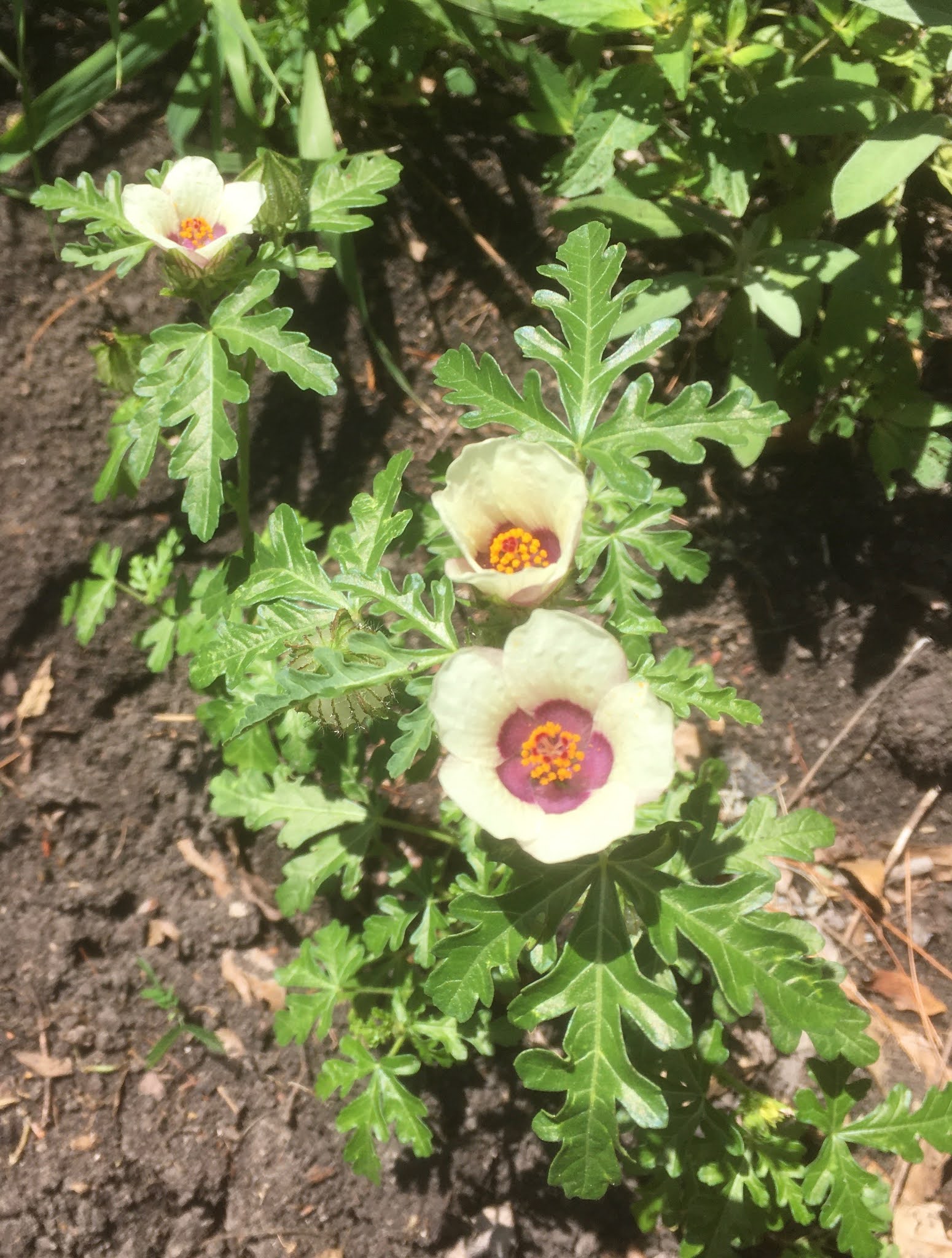
For the first time since we bought our Columbia, Missouri home, 24 years ago, clumps of greenery with showy, up-facing flower cups have appeared in the herb garden.  After a bit of research, we have determined that they are prairie poppy mallow, a member of the hibiscus family native to the Midwest and South-Central States.


Most often found in dry, well-drained soil typical of glades, roadsides and disturbed areas, these flowers are often planted in rock gardens; a deep tab root explains their drought tolerance.  Since. poppy mallows spread by seed, they must have reached our garden with the assistance of birds.

Once again, nature has surprised us with her diversity and adaptability.  Try as we might to pave over, till up or pollute her landscapes, she manages to thrive. 

Tuesday, April 27, 2021

Pink Moon at Dawn

As the first light of dawn spread across the eastern horizon this morning, the full moon was setting in the southwest.  This is the Pink Moon, named for the many pink-colored wildflowers that usually bloom in April.

This year, most of the Central U.S. has experienced a sluggish spring as waves of cold air have invaded the Heartland, delaying the leafing of trees and the flowering of shrubs.  Having just returned to our Littleton, Colorado, farm, we found that the landscape is more suggestive of late March than late April and are anxiously waiting to see how many more trees (especially ash trees) we may have lost following the deep freeze last week.

Meanwhile, our lone natural satellite makes her scheduled rounds, beautifying the scenery when flowers cannot.  We humans have long relied on her cycles, reassured that at least one aspect of our life is predictable. 

Monday, April 27, 2020

Along Hominy Creek

Those of us who reside in Columbia, Missouri, have access to a fine network of hike-bike trails that parallel major streams as they drain toward the Missouri River.  Most of these can be rather congested, especially on fair weather weekends, so, in this time of Covid-19, my wife and I headed for the Hominy Creek Trail, in northeast Columbia.  While it is used by those in adjacent neighborhoods, it is not a popular destination for most residents of the city.


Indeed, on this mild, breezy afternoon, we encountered only a handful of other walkers and bikers as we hiked along the trail.  Stately sycamores, flowering buckeyes and wild phlox adorned the creekside woodlands and the scenic landscape of an abandoned farm bordered a section of the trail.  Turkey vultures and red-tailed hawks circled overhead as we were serenaded by a host of songbirds; most vocal were northern cardinals, Carolina wrens and common yellowthroats.

Relatively un-utilized, natural escapes are especially inviting as we practice social distancing and an effort to find such preserves introduces us to new and interesting destinations.  The Hominy Creek Trail proved to be an attractive and rewarding choice.